



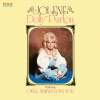

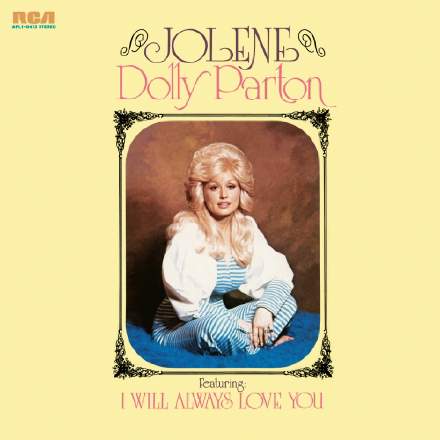
Do a quick online search for commentary on this Dolly Parton classic, and you’ll find reams and reams about the song’s autobiographical origins and lyrical message, with the occasional appreciation of its instantly recognisable guitar riff. What’s crazy to me, though, is that so little appears to have been said about the song’s incredibly unorthodox structure – which is what, for me at least, really sets it apart from the herd.
To be specific, first of all the verse here is built in five-bar sections (eg. 0:32-0:43), which is already an unusual move, especially when the song’s intro initially hints at more traditional four-bar structural subdivisions. Fundamentally, each of these five-bar units ends up feeling like a ‘four plus one’, with the trailing ‘added’ bar cannily providing a little extra space for listeners to chew over each chunk of lyrics before the next arrives, as well as leaving a nice window of opportunity for backing instrumental fills such as the string lines at 0:40.
But what’s even more interesting is that the chorus structure is almost identical, the single difference being an extra half-bar added to the tonic chord under the end of the “Jolene, Jolene, Jolene, Jolene” hook. (You hear it for the first time at 0:13, for example.) I think this is a masterstroke on several levels. Firstly, the slight musical hiatus adds emphasis and poignancy to the song’s hook. Secondly, it differentiates the chorus from the verse in a fundamental and ‘feel it in your gut’ kind of way, while at the same time retaining the apparenty simplicity and immediacy of a chord pattern that effectively repeats throughout the song. And, thirdly, it frames the (still non-standard, remember) five-bar patterns underlying the verses as a metrically more stable alternative to the five-and-half-bar choruses – especially given that the first chorus precedes the first verse.
In my recent critique of Taylor Swift’s ‘Fate Of Opheila’, I said that I knew of no other mainstream hit that used five-bar sections as a structural device. I stand corrected! You wait ages for a bus, then two come along at once…
In addition, let me also point out that the arrangement has a few gently subversive moments as well. Check out the other-wordly, glassy textural effect in the left channel during the intro and opening chorus, for instance, which I’m guessing is the result of some kind of light string-scraping on the part of the second guitarist, given that the sound disappears once the second guitar starts its ‘proper’ left-channel part in Verse 1 (at 0:32). Notice too that the fiddle and slide guitar which feature so prominently in Verse 1 gradually fade out and don’t then recur until the final Chorus, which is a pretty bold arrangement decision given the potential of undermining the impact of Chorus 2’s arrival at 1:16. Indeed, I don’t think it’s any accident that you can hear the guitar faders clearly being ridden upwards during the final bar preceding that chorus (ie. starting at around 1:14) – without that extra harmonic and rhythmic impetus I reckon the chorus texture would likely have felt a bit underwhelming at that point.