







There’s a long tradition of songwriters extending four-bar phrases to five bars – the prechoruses of Psy’s 'Gangnam Style', Britney Spears’ 'Toxic', and Madonna’s 'Like A Virgin', for instance, or the middle sections of Dua Lipa’s 'Love Again', Luis Fonsi’s 'Despacito', and Harry Styles’ 'As It Was'. What is much more unusual, though, is using five-bar phrases as a structural device, in other words as a recurring feature that characterises specific song sections. The only famous examples I can think of are The Beatles’ ‘Eleanor Rigby’ and Corona’s ‘Rhythm Of The Night’, which contrast five-bar verses and choruses (respectively) against more four-square sections elsewhere in the song.
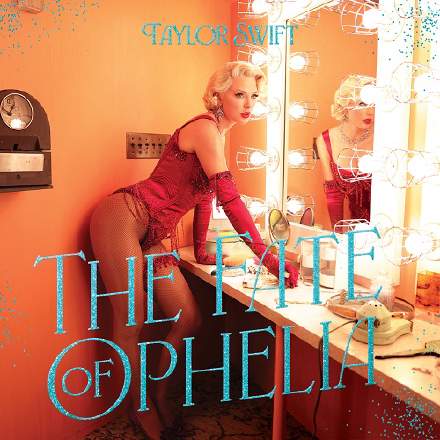
But there’s a particular sweetspot that this song hits with its structure, by creating a certain logic to the five-bar phrases by virtue of the alternating pattern of 5+5-bar verse, 4+5-bar prechorus, 5+5-bar chorus, and 4+5-bar chorus coda. It manages to somehow be regular enough to ingrain itself in your memory after a few listens, but nonetheless irregular enough to gently wrong-foot you repeatedly before that – especially when combined with a couple of more traditional ‘one-shot’ section extensions (at 1:24 after the first chorus and at 2:57 after the 5+4-bar middle-section) and a sly arrangement drop midway through the second verse at 1:36.
The question of what key/mode this song occupies is also thought-provoking. The whole harmonic pattern uses the notes of the F major scale, but there’s no strong sense of cadence into that key (or indeed its relative D minor) in either of the song’s two chord progressions ( Gm-Dm-F-C and Bb-F-Dm-C), which gives the song a much more modal flavour for me – the strong ‘unresolved’ E in the chorus, for instance, argues against it being F major’s leading note. But if it’s modal, then what are we calling the mode’s home chord? The Gm at the start of most of the sections (putting us in G Dorian)? The Bb at the start of the choruses (giving Bb Lydian)? Or the C onto which all the sections settle in their final bar (giving C Mixolydian)?
In the light of this general ambiguity, I therefore find myself asking what (if anything) is giving the harmony its sense of purpose or momentum, and in this case I think the root progressions provide some coherence and direction here by focusing heavily on falling-fourth patterns, not only within each pattern ( G-D and F-C in the main pattern and Bb-F in the choruses) but also whenever either pattern loops back into the main pattern (giving a longer C-G-D chain). The relationship between the melody line and the chords is another important factor too, I reckon, by varying the former’s degree of dissonance. Notice, for example, how the verse melody keeps stressing its G and Bb notes beyond the first chord over which they’re consonant ( Gm) and over into the second and third chords ( Dm and F), where they’re not – and then switches to stressing A instead of G over the fourth chord ( C). The prechorus also pits a melody E against its second-bar Dm chord, G and D against its third-bar F chord, Bb and E against its seventh-bar F chord, and F against the final C chord. But then when we get to the chorus and chorus coda, the melody stresses almost exclusively consonant notes instead, creating a characteristic contrast in overall sonority.
And while we’re on the subject of the vocal melody, there are also some nice examples of subtle question/answer phase-endings here. For example, where the first half of the verse ends with a rising A-B melodic contour ‘question’ (on “all alone” at 0:16 and “fantasy” at 1:32), the second half ends with the falling A-G ‘answer’ (“watch it blow” at 0:26 and “sanity” at 1:42). And there’s also the end of the first half of the chorus, where “see it all” ends on an E, leading on to the next phrase’s rising G-A pickup, while the second half sustains the final syllable of “Ophelia” into a falling E-D-C melisma.
[Incidentally, if you’re a fan of Swift’s music, do check out the What’s In A Song podcast, where the hosts are currently analysing all the songs on her latest album Life Of A Show Girl one track at a time, with loads of great audio demonstrations. Here’s the episode dedicated to ‘The Fate Of Ophelia’, for instance.]